


Some people spend their lives trying to become someone. Others are born into a name that already means something. But perhaps the greatest challenge is learning how to become yourself.

There is a particular kind of pressure that comes with carrying a name the world already recognises.
Before you introduce yourself, people have formed an opinion. Before you make your first move, expectations have already been placed on your shoulders. Your achievements are compared, your decisions are examined, and sometimes, no matter how hard you work, people struggle to see you beyond the history attached to your name.
For Seyi Awolowo, this is not an unfamiliar experience.
As the grandson of Chief Obafemi Awolowo, one of Nigeria’s most influential political figures, Seyi grew up connected to a legacy that existed long before he began defining his own path. It is a name associated with history, leadership and public service. But having a famous surname does not automatically answer the most personal question anyone can face:
Who are you going to become?
That question sits at the heart of Seyi’s journey. His story is not simply about being born into a prominent family, becoming a reality television personality or finding opportunities in the entertainment industry. It is about the complicated process of building an identity, pursuing personal ambition and learning that an inherited legacy can be a foundation without becoming a limitation.
Growing up in the Awolowo family meant being surrounded by a history that carried considerable public significance. Yet Seyi has repeatedly expressed a desire to be recognised for his own efforts rather than receiving automatic recognition because of his surname.
In interviews, he has spoken about working for his money, pursuing different professional opportunities and wanting to establish himself independently. He has also described an ambition to become more prosperous than his grandfather.
It is an ambitious statement, but there is something important beneath it.
He is not simply measuring success by the achievements of someone who came before him. He is confronting the responsibility of deciding what his own life should represent.
There is a lesson here for anyone who has ever felt defined by their background, family circumstances, school, neighbourhood or the expectations of other people.
Your starting point is part of your story, but it does not have to become the limit of your possibilities.
Some people inherit wealth. Others inherit responsibility. Some inherit opportunities, while others inherit difficult circumstances they spend years trying to overcome. Whatever the starting point may be, there comes a time when everyone must decide what to do with the life in front of them.
Seyi’s desire to establish an identity beyond the Awolowo name speaks to that universal struggle: appreciating where you come from without surrendering the freedom to decide where you are going.
Long before millions of people became familiar with his face, Seyi was already exploring the entertainment industry.
He began modelling at 16, securing his first professional contract before adulthood. Acting also formed part of his interests before reality television brought him wider recognition.
He studied Psychology at Houdegbe North American University, but his professional interests extended into modelling, acting, content creation and other commercial ventures.
His appearance on Big Brother Naija: Pepper Dem in 2019 introduced him to a much larger audience. He finished fifth in the competition, but the experience offered something that went beyond his position on the final scoreboard: visibility.

For someone interested in entertainment, visibility can be an opportunity. It can introduce your work to people who might never have discovered you otherwise. It can open conversations, create professional relationships and place you in rooms that once seemed distant.
But visibility is not the same as a career.
The real challenge begins when the cameras stop rolling and the attention moves somewhere else. What do you do with the opportunity? What are you building? What happens when people stop talking about the programme and start asking what you can actually do?
These are questions that many people who experience sudden success eventually have to confront.
Seyi’s continued pursuit of acting is part of that process. He has appeared in productions including Brotherhood, Hey You! and Big Love, while speaking openly about his desire to take on more challenging roles.
He has also acknowledged the possibility of being typecast because of his appearance and voice. Rather than accepting that as the natural boundary of his career, he has expressed a desire to explore characters that challenge audience expectations.
That willingness to seek new opportunities matters. It suggests an understanding that being discovered is only the beginning. Becoming good at something, developing your craft and earning opportunities repeatedly require a different kind of commitment.
One of the most interesting things about building a life is that progress rarely follows a straight line.
There are moments when everything seems to be moving forward, and others when a single decision changes how people see you. Sometimes, the very platform that introduces you to the world also exposes you to criticism you never anticipated.
Seyi experienced this during his return to Big Brother Naija for the 2023 All-Stars edition.
Some of his comments inside the house attracted widespread condemnation, particularly remarks about women and his sons. The backlash followed him beyond the programme. In subsequent interviews, he acknowledged that his comments were wrong and expressed regret.
It would be easy to ignore this chapter in a celebratory profile. But an honest story about personal growth cannot pretend that mistakes do not exist.
Nobody builds a meaningful life by getting every decision right. What matters is the willingness to recognise when you have been wrong, take responsibility and understand that an apology is not the end of the work. Growth must also be reflected in what happens afterwards.
Public criticism can be uncomfortable, especially when thousands of people are watching. But criticism, when honestly examined, can become an opportunity to confront parts of ourselves that we might otherwise avoid.
The lesson is not that every criticism is correct or that public opinion should determine your identity. It is that protecting your ego at all costs can prevent you from becoming a better person.
There is strength in admitting that you have more to learn.
There is strength in accepting responsibility.
And there is strength in refusing to let one chapter become the entire definition of your life.
In an entertainment industry where attention can sometimes appear more valuable than ability, Seyi has become increasingly vocal about the difference between popularity and genuine accomplishment.
In recent conversations, he has questioned a culture that often rewards engagement over intellectual development and virality over competence. He has also encouraged people entering reality television to remain authentic rather than constantly reshaping themselves to satisfy public expectations.
These views reveal an interesting side of his journey.
Having experienced the attention that comes with reality television, he understands that being recognised is not necessarily the same as being respected for your work. A person can become popular without developing a skill, and a talented person can remain undiscovered despite years of dedication.
But the answer cannot simply be to reject visibility. It is to understand what visibility should be used for.
For a creative, attention should create an opportunity to demonstrate ability. For an entrepreneur, it should help communicate value. For an entertainer, it should introduce audiences to work worth experiencing.
The numbers may bring people to your door, but your substance gives them a reason to stay.
This is a lesson that extends far beyond entertainment. We live in a time when people can become consumed by how they are perceived. The pressure to appear successful can sometimes become greater than the commitment to actually build something meaningful.
But a life built entirely around appearances is difficult to sustain.
Your skills matter. Your character matters. Your ability to keep learning matters. And the things you create when nobody is watching matter just as much as the things people applaud.
Another revealing part of Seyi’s recent conversations concerns his relationship with language and cultural identity.
Although he comes from a prominent Yoruba family, he has openly admitted that he needs to improve his Yoruba pronunciation and fluency. He has discussed the difficulty this creates when considering substantial speaking roles in Yoruba-language films and expressed an interest in learning the language properly.
It is a surprisingly human detail.
We often assume that people who come from particular backgrounds automatically possess every connection associated with that heritage. But identity is not always something we understand completely from birth. Sometimes, it is something we have to return to, study, question and deliberately reconnect with.
There is no shame in recognising what you do not know.
In fact, one of the most important qualities a person can develop is the ability to remain teachable. The willingness to learn a language, improve a skill, revisit an old interest or admit that you are not yet where you want to be is not weakness. It is an indication that you are still growing.
The world does not stop offering opportunities to people who are willing to learn.
And sometimes, the next stage of your journey begins with the simple admission that there is something you need to understand better.
Perhaps the most important thing about Seyi Awolowo’s journey is the question it raises about personal identity.
What happens when the world has already decided who you are supposed to be?
What happens when your family name carries expectations, your public mistakes become part of your reputation and your professional ambitions are constantly measured against the person people remember from television?

You have two choices. You can spend your life trying to satisfy every expectation, or you can take responsibility for the person you are becoming.
That does not mean rejecting your history. It means understanding that your history is not the whole story.
You can respect your family and still create your own path. You can appreciate an opportunity without allowing it to define your entire career. You can make mistakes without making them permanent. You can be successful in one area and still have the courage to become a beginner in another.
Most importantly, you can change.
For anyone building a career, pursuing a creative ambition, starting a business or trying to find their place in the world, there is something worth taking from this.
Do not become so comfortable with the identity people have given you that you stop discovering who you could be.
Do not allow a difficult beginning to convince you that you have a limited future. Do not mistake attention for achievement, and do not let the fear of criticism prevent you from trying something meaningful.
You will not always get it right. You will encounter opportunities you are not prepared for, expectations you cannot satisfy and moments that force you to reconsider your decisions.
Keep learning. Keep developing. Take responsibility when you fall short. Give yourself permission to grow beyond the version of yourself that people already know.
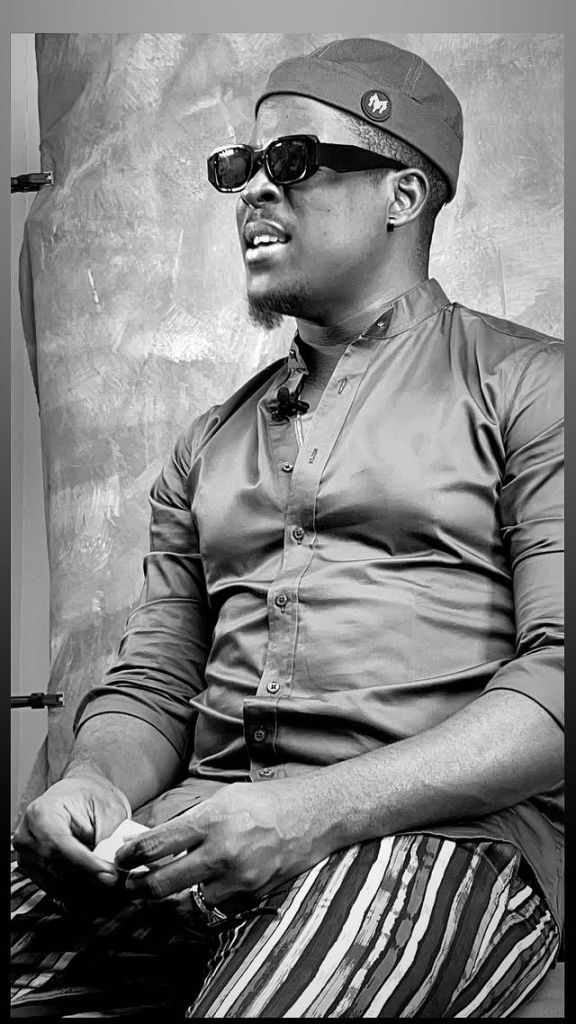
Seyi Awolowo carries a name that will always be connected to an important part of Nigerian history. That is an undeniable part of his story.
But the more interesting question is what he chooses to build with the life that is his.
A legacy is not simply a famous surname, a successful family or a history that people remember. It is also the work you do, the values you uphold, the people you influence and the opportunities you create for others.
Not everyone will inherit a recognised name. Not everyone will have access to the same opportunities. But everyone has the responsibility, within their circumstances, to decide what they want their lives to stand for.
And perhaps that is where Seyi’s story becomes bigger than Seyi himself.
It reminds us that we do not have to spend our lives competing with the past, performing for the present or waiting for permission to define our future.
The people who came before us may have written remarkable chapters. We can honour those chapters without being afraid to write our own.
You may inherit a name, a history or a set of expectations. But the life you build, the person you become and the legacy you leave behind are still yours to create.

Proudly powered by Creative Culture